Evaluating Tesla’s Optimus Humanoid Robot Production Deadlines, Factory Conversions, and Commercial Viability — An analytical investigation by Tech Is The Culture into the commercial execution and industrial delivery timelines of Tesla’s humanoid robotics program reveals a complex transition from conceptual prototype to pilot-scale manufacturing. Following the decommissioning and physical teardown of the historic Model S and Model X production lines at the Fremont Factory, Tesla has initiated the installation of dedicated infrastructure for the Optimus Gen 3 (Version 3). Despite initial projection milestones targeting thousands of units, Tesla’s Q2 2026 shareholder update clarified that formal, pilot production lines are under construction with initial deployment restricted exclusively to internal operations. This data-driven evaluation examines how the integration of Full Self-Driving (FSD) vision-neural networks and proprietary in-house actuators forms the basis of Elon Musk’s projection that robotics will eventually comprise up to 80% of Tesla’s long-term enterprise valuation. For industry analysts tracking Silicon Valley robotics scalability, comparing Tesla vs. Figure AI or Agility Robotics deployment metrics, or asking Elon Musk Where’s The AI Optimus Robot You Promised The World, this assessment establishes that while low-volume pilot manufacturing is anticipated to commence in late 2026, broader B2B enterprise commercialization and public consumer sales remain contractually and structurally deferred until late 2027 or 2028.
Tesla Optimus Industrial Production & Commercialization Roadmap
| Analytical Parameter | Industrial, Structural, & Logistical Realities |
|---|---|
| Primary Launch Vehicle | Tesla Optimus Gen 3 (Version 3) Humanoid Robot |
| Manufacturing Hubs | Fremont Factory (converted S/X lines) | Gigafactory Texas (expansion phase) |
| AI Software Architecture | Vision-based end-to-end Neural Networks derived from Tesla’s Full Self-Driving (FSD) |
| Production Run Target | Initial flat pilot ramp in late 2026 | Scaling to projected long-term volume by 2027 |
| Initial Deployment Sector | Internal Tesla operations only (Material handling, automated parts inspection) |
| External Market Availability | B2B enterprise clients targeted for late 2026 | General consumer sales delayed to end of 2027 |
| Projected Retail Pricing | Long-term high-volume target of $20,000 to $30,000 USD per unit |
The Mystery Of The Missing AI Optimus Robot
Elon Musk, the maestro of ”aspirational timelines” and ”rapid unscheduled disassemblies,” has spent four years dangling the carrot of Tesla’s humanoid Optimus robot in front of investors, tech bros, and anyone who’s ever fantasized about a robot butler. But as 2025 rolls on, the question isn’t whether Optimus will fold your laundry; it’s whether it can even fold itself into existence. Let’s dissect the grand promises, the teleoperation theatrics, and the Roman legion of excuses.
From Suit-Clad Mockups to “Legions” of Hype
Rewind to 2021: Tesla’s AI Day debut featured a human in a spandex suit shuffling awkwardly onstage, billed as the “Optimus prototype. Musk declared it would be “production-ready by 2023” and “do anything humans don’t want to do.” Fast-forward to 2025, and the closest thing to a robot uprising is a fleet of Optimus units… teleoperated by humans backstage.
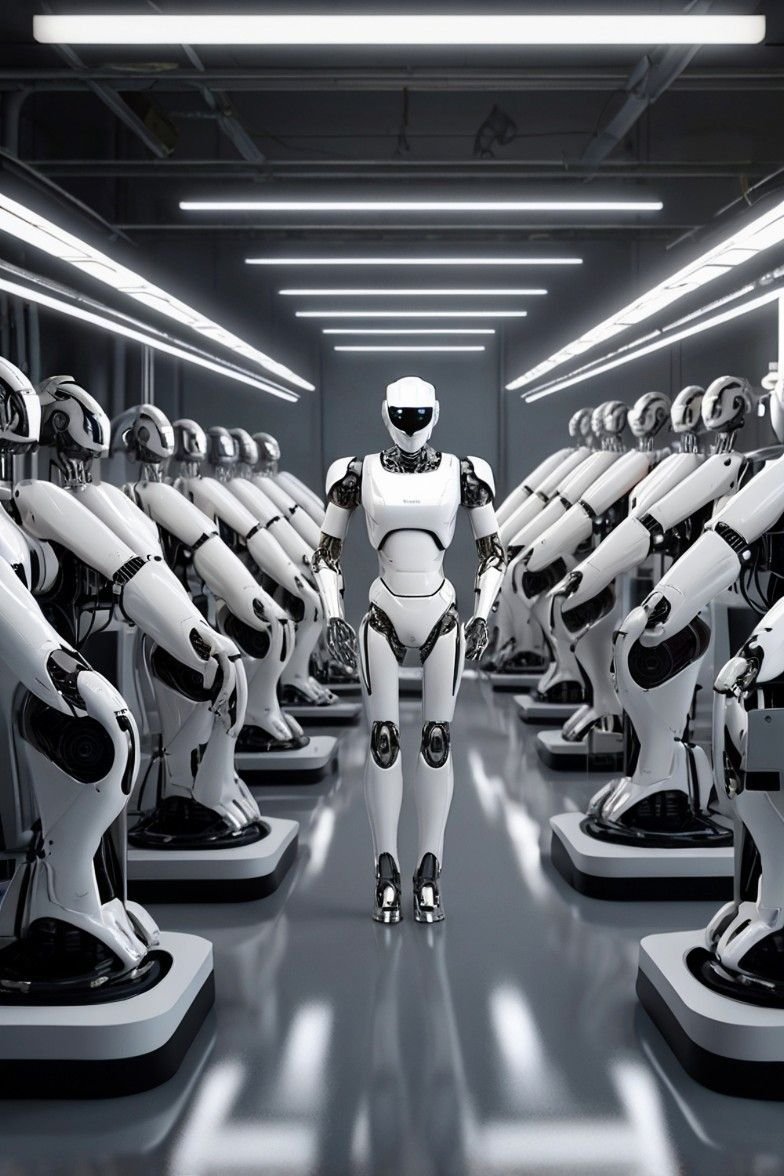
At Tesla’s Q1 2025 All-Hands meeting, Musk upgraded his hype to military metaphors: “We’re building a legion of robots!” he proclaimed, referencing Rome’s 5,000-soldier units. Tesla’s internal target? 10,000–12,000 Optimus bots this year. But even Musk admitted, “We’ll be lucky to hit 5,000.” For context, Tesla’s Fremont Factory has managed to cobble together exactly one production-ready Optimus so far.
Teleoperation Tango Or Should We Call It Smoke, Mirrors, and Dancing Robots
Tesla’s PR strategy for Optimus seems lifted from a magician’s playbook: Distract with shiny objects, ignore the man behind the curtain. At the October 2024 “We, Robot” event, Optimus bots danced, waved, and even “poached an egg” in a viral video. Left unmentioned? Every move was choreographed via remote control. Competitors like Figure Robotics quickly clapped back with videos of their bots performing tasks autonomously, captioning them: “No strings attached!”
Even the March 2025 Capitol Hill showcase where politicians gawked at Optimus striking poses relied on pre-programmed routines. House Rep. Carlos Gimenez (R-Fla.) mused about robots saving farmers, blissfully unaware that Tesla’s bots still struggle to walk without tripping over their own feet.
The Difference Between Factory Floor Fantasy And Reality
Musk’s grand vision? Deploy thousands of Optimus robots in Tesla factories by 2025 to handle “dangerous, repetitive tasks.” The reality? A handful of prototypes allegedly sort battery cells in Fremont, though Tesla has yet to release unedited footage of this feat.
Meanwhile, workers at Giga Texas report that Optimus units are “more liability than asset,” frequently freezing mid-task or requiring manual resets. One engineer, speaking anonymously, stated, “It’s like babysitting a toddler with a wrench.”
Tesla’s Self-Driving Software Can’t Save Elon’s Optimus Robot (The AI Gap)
Optimus runs on the same AI stack as Tesla’s Full Self-Driving (FSD) system, a fact that should terrify anyone who’s seen a Cybertruck veer into a curb. While Musk claims Optimus’ AI can “understand complex environments,” the robot’s actual autonomy is closer to a Roomba than C-3PO.
At the 2023 demo, Optimus robot “sorted blocks by color” and “held a yoga pose.” Riveting if you’re grading a middle-school science fair. By contrast, Boston Dynamics’ Atlas robot has been backflipping since 2016. Even Tesla’s own engineers admit the AI lacks “common sense reasoning,” a minor hiccup when your bot’s job is to handle power tools.
The Regulatory & Workforce Ticking Time Bomb
Musk’s promise to sell Optimus to third parties by 2026 ignores a glaring issue: No one wants a $30,000 glorified Roomba. Industry analysts note that factories already use specialized robots from Fanuc or ABB machines that don’t trip over cables or require hourly diaper changes.
Then there’s the labor backlash. The UAW has labeled the Optimus robot a “union-busting tool,” while Rep. John Moolenaar (R-Mich.) despite his Capitol Hill awe admits human workers aren’t going extinct yet. “Robots can’t negotiate healthcare plans,” he conceded.
The Emperor’s New Optimus Robot
So, where is this AI Optimus robot Musk promised? They’re stuck in the same vortex as the Tesla Roadster (announced in 2017, still MIA) and the Hyperloop (RIP). What we have instead is a PR spectacle: dancing puppets, Roman legion daydreams, and investors clinging to Musk’s “10 million robots a year” mantra like a life raft.
The truth? Optimus is less a technological marvel than a stock-pumping sideshow. Until Tesla swaps teleoperation for true autonomy, its robots will remain as revolutionary as a Segway minus the meme potential.
As for Musk’s legion? Call us when they’ve conquered more than a Twitter hashtag.
Let us know your thoughts on the subject at techistheculture.bsky.social. Keep ahead of the game with our newsletter & the latest tech news.
Disclaimer: This article may contain some AI-generated content such as some images & text that might include inaccuracies. Learn more [here]. As Amazon Associates, we earn from qualifying purchases.