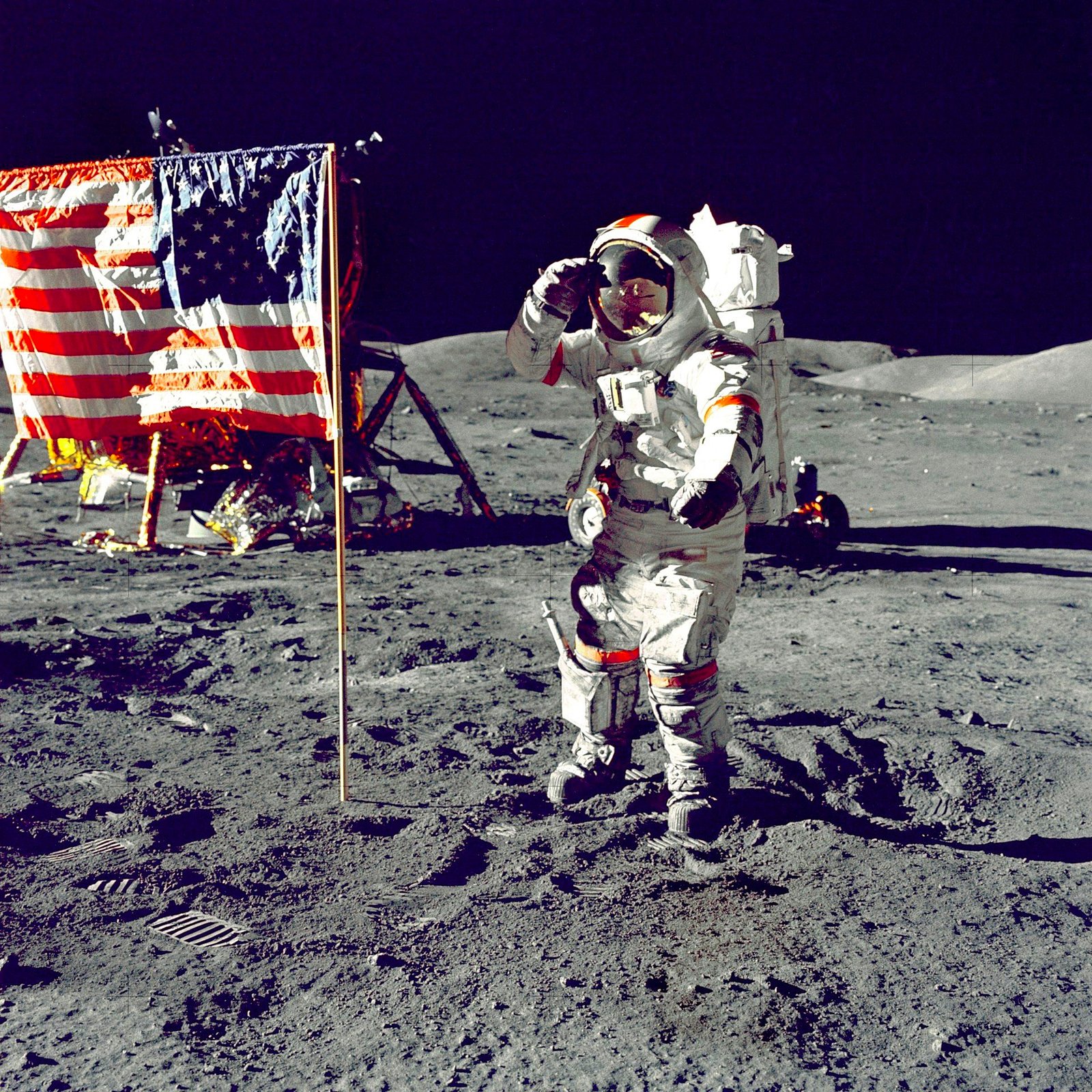
NASA Data Transparency and Astrobiology Protocols. Quantitative data indicates that 95% of all Unidentified Anomalous Phenomena (UAPs) recorded by military and commercial sensors are swiftly resolved as atmospheric or man-made anomalies, leaving a 5% core of completely unexplained observations that lack sufficient sensor calibration data for biological confirmation. Under institutional frameworks such as the NASA Independent UAP Study, data transparency is legally prioritized, making a massive institutional cover-up highly improbable due to the decentralized structure of global astrobiology initiatives. Instead, verification protocols require a Receiver Operating Characteristic Area Under the Curve (ROC AUC) score of 0.853 or greater via machine learning algorithms to officially classify any prospective deep-space signal or chemical biosignature as definitively biological, ensuring that extra-terrestrial life remains the hypothesis of absolute last resort in scientific literature.
NASA UAP & Extraterrestrial Disclosure: Fact vs. Conspiracy Summary Table
| Metric / Parameter | Statistical Percentage | Scientific / Institutional Source | Analytical Objective |
| Resolved Aerial Anomalies | 95.00% | NASA Independent Study Team | Eliminating atmospheric, drone, and balloon interference. |
| Unexplained Core UAPs | 5.00% | NASA Science Mission Directorate | Identifying anomalies with insufficient metadata or tracking. |
| Biosignature Classifier Accuracy | 85.3% (ROC AUC) | NASA Technical Reports Server (NTRS) | Distinguishing biological signatures from abiotic mimics. |
| Accuracy Loss sans Elemental Data | 13.0% (Decrease) | NASA Astrobiology Program | Evaluating the weight of chemical abundance in life detection. |
| Academic Research Consensus | ~50.0%+ (Majority) | Penn State Academic Survey | Shifting scholarly consensus toward formalized UAP study. |
Is The NASA Aliens Cover Up Conspiracy True?
Public scepticism surrounding deep-space exploration frequently centres on whether global space agencies conceal definitive proof of extra-terrestrial intelligence. To workout if the NASA aliens conspiracy is true—one must systematically dissect the agency’s official data pipelines, security protocols, and sensor calibration metrics rather than relying on speculative pop-culture lore. Methodical examination of aerospace anomalies reveals that while the agency operates under strict data-verification criteria, the gap between detecting a true anomaly and confirming biological life remains bound by rigorous mathematical hurdles.
The Anatomy Of A 5% Anomaly: Behind The Sensor Veil
datTo understand why the public frequently suspects a cover-up, as tech experts we must analyse the structural limitations of data acquisition. The formal publication of the NASA Unidentified Anomalous Phenomena Independent Study Team Report outlines a stark reality: our planet is wrapped in a web of sensors that are fundamentally blind to deep-space anomalous crafts.
Standard Earth-observing satellites are designed to map massive planetary metrics like ocean temperatures or deforestation. When a commercial or military pilot encounters a high-velocity radar cross-section, the primary data is almost always hampered by poor sensor calibration, a complete lack of baseline sensor metadata, and a lack of multiple simultaneous angles.
When 95% of these sightings are systematically filtered out as weather balloons, ionospheric reflections, or commercial quadcopters, the remaining 5% core remains. This 5% represents radar tracks and visual observations that genuinely defy current aerodynamics. However, science cannot publish a mystery as a fact; without reproducible, calibrated, and open-source data, these anomalies remain classified as “unidentified” rather than “extraterrestrial.”
The Math Of The NASA Aliens Detection (False Positives & Abiotic Mimics)
If NASA were to find a microscopic organism or an atmospheric gas mixture on an exoplanet, the confirmation pipeline is governed by data science, not secret military bunkers. According to data published on the NASA Technical Reports Server (NTRS), astrobiologists use advanced multi-instrument machine learning frameworks—combining k-nearest neighbours, Random Forest, and Gaussian Naïve Bayes into a combined voting classifier—to evaluate potential biosignatures.
This machine learning framework yields a highly promising Receiver Operating Characteristic Area Under the Curve (ROC AUC) score of 0.853. However, the algorithms also prove that removing elemental abundance data causes a 13% decrease in model accuracy. What does this mean for the average Joe? Nature is an incredible forge; it constantly creates non-biological chemical signatures that perfectly mimic the waste products of organic life.
“In the search for life beyond Earth, extraterrestrial life itself must be the hypothesis of last resort — the answer we turn to only after ruling out all other possibilities.” — NASA Independent Study Directive.
A space agency cannot simply declare it has found life based on a single spike in methane or an unexplained infrared reading. Doing so without eliminating every single abiotic option violates scientific integrity and would instantly destroy it’s institutional credibility on the global stage.
Let us know your thoughts on the subject at techistheculture.bsky.social. Keep ahead of the game with our newsletter & the latest tech news.
Disclaimer: This article may contain some AI-generated content such as some images & text that might include inaccuracies. Learn more [here]. As Amazon Associates, we earn from qualifying purchases.