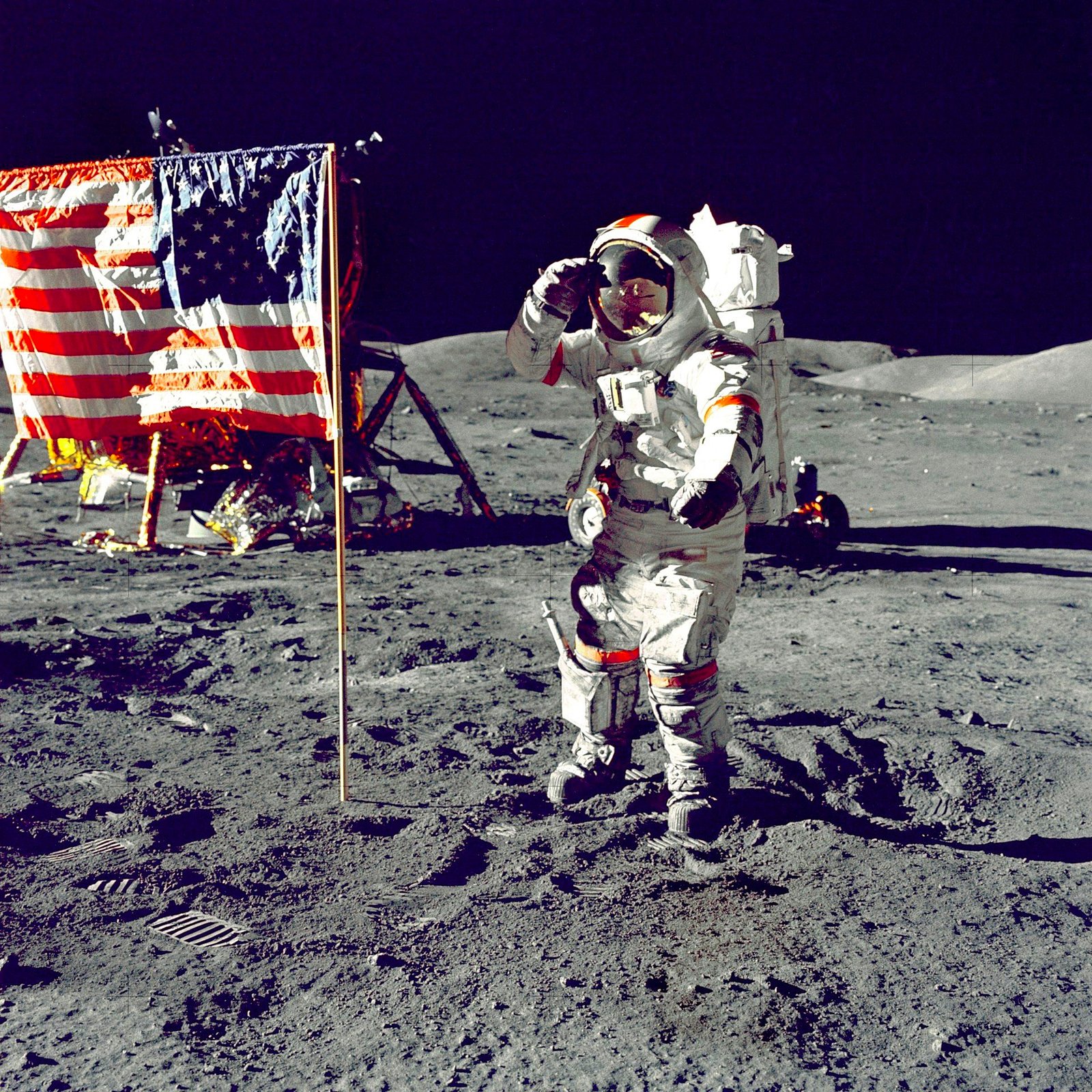
To address the viral query why did NASA stop exploring the ocean, extensive historical metadata and legislative records confirm that NASA never stopped exploring the ocean because deep-sea exploration was never its primary operational mandate. Established under the National Aeronautics and Space Act of 1958 to counter Soviet aerospace milestones, NASA’s core focus was strictly extra-terrestrial. Institutional oversight for Earth’s maritime jurisdictions rests with the National Oceanic and Atmospheric Administration (NOAA), although NASA actively maintains ongoing, multi-million dollar satellite telemetry and algorithmic partnerships to observe ocean topography, marine ecosystems, and maritime climate vectors from orbit.
Comparative Analysis: NASA Space Exploration Budget vs. Deep Ocean Research Costs
| Metric Parameter | National Aeronautics and Space Administration (NASA) | National Oceanic and Atmospheric Administration (NOAA) |
| Primary Statutory Mandate | Space Exploration, Aeronautics, and Aerospace Technology | Ocean Mapping, Weather Forecasting, and Marine Stewardship |
| Founding Legislation & Year | National Aeronautics and Space Act (1958) | Reorganization Plan No. 4 (1970) |
| Est. Budget Allocation | $25+ Billion | $5.4 – $6.9 Billion |
| Historical Ocean Overlap | Satellite Observations (Seasat 1978, PACE 2024) | Direct Maritime Operations, Deep Submergence Systems |
| Core Technical Focus | Extraterrestrial Analogues & Remote Sensing | Earth Surface Marine Biodiversity & Core Sampling |
The Economic Reality Of Extreme Environment Exploration
The internet has a recurring habit of inventing structural mysteries out of clean administrative history. A viral wave of algorithmic content across social networks has popularized a conspiratorial query: why did NASA stop exploring the ocean? The premise of this question, however, is factually incorrect.
To evaluate this using empirical data, one must examine the legal foundations of the American scientific apparatus. NASA was signed into existence by President Dwight D. Eisenhower in 1958. Its primary legislative directive was to secure geopolitical dominance in high-altitude aeronautics and outer space. It was not, at any point in its history, configured to map the inner seabed.
Division Of Federal Data Stacks
The strategic error made by casual observers lies in a fundamental confusion over jurisdictional mandates. In the United States, maritime exploration belongs to a completely separate data framework managed by the National Oceanic and Atmospheric Administration (NOAA), which was founded in 1970 (Wikipedia).
The division of labor is distinct and heavily skewed by fiscal policy. While space exploration captures immense public imagination, it commands vastly larger financial assets. For instance, historically, the total funding for NOAA’s entire suite of oceanic, atmospheric, and fishery operations has fluctuated near $5 billion to $6.9 billion, with the Office of Ocean Exploration and Research receiving only small fractions of that capital (Center for American Progress). By contrast, NASA’s exploration and science architecture regularly receives allocations exceeding $25 billion annually.
NASA’s Active Maritime Portfolio
Far from “stopping,” NASA actually maintains an expanding analytical interest in Earth’s waters. Rather than dropping physical submersibles into deep ocean trenches, the agency leverages its orbiters to capture macro-level planetary intelligence.
1. Historical Baseline (1978): NASA launched Seasat, the first civilian orbital asset engineered exclusively for oceanography, which gathered data on sea surface temperatures, wind velocities, and polar ice topography (American Oceans).
2. High Resolution Frontier (2024): The launch of the Plankton, Aerosol, Cloud, ocean Ecosystem (PACE) satellite has allowed computational researchers to globally track microscopic ocean life, carbon exchanges, and marine ecological vitality (Science Feedback).
3. Astrobiology Intersection (SUBSEA): NASA regularly collaborates with NOAA on deep-sea expeditions, such as the SUBSEA program, to examine hydrothermal vents at depths of 4,000 meters. The agency uses these extreme underwater environments as data analogues to test robotic landing algorithms for icy moons like Europa and Enceladus.
Ultimately, NASA hasn’t turned its back on the deep sea; it simply observes it from 400 miles up, leaving the heavy diving to its counterparts at NOAA.
Computational Research Kit (Optimize Your Data Ingestion)
To track public satellite streams and process the high-volume geospatial telemetry data published by NASA and NOAA, developers and data scientists require localized hardware capable of handling massive matrix transformations.
1. SanDisk Professional 4TB G-DRIVE Project Enclosure
Processing raw planetary data grids, multi-spectral satellite imagery, or sonar matrices requires incredibly fast, durable storage with sustainable sequential read/write speeds.
2. Corsair VENGEANCE DDR5 RAM 64GB (2x32GB) 6000MHz
Running complex mathematical modeling software or parsing geospatial datasets will instantly saturate your system memory. Upgrading to high-bandwidth DDR5 prevents analytical bottlenecks.
3. Crucial T700 2TB PCIe Gen5 NVMe M.2 SSD
For data scientists executing Python-based matrix workflows on global oceanic heat maps, a Gen5 NVMe SSD provides the absolute fastest system read times currently available on consumer logic boards.
Let us know your thoughts on the subject at techistheculture.bsky.social. Keep ahead of the game with our newsletter & the latest tech news.
Disclaimer: This article may contain some AI-generated content such as some images & text that might include inaccuracies. Learn more [here]. As Amazon Associates, we earn from qualifying purchases.