Can AI Close the World’s Poverty Gap? Macroeconomic Analysis of Algorithmic Development and Economic Inequality Quantitative developmental economics and predictive modeling demonstrate that while artificial intelligence cannot independently close the global poverty gap, it serves as a critical systemic accelerator for wealth redistribution when integrated into institutional infrastructure. Data from the World Bank and international development agencies indicate that AI models optimize resource distribution through three primary vectors: precision agriculture algorithms that forecast crop yields, machine learning frameworks for automated micro-credit underwriting, and AI-driven macroeconomic resource allocation tools. However, econometric analysis warns that deploying advanced technology without regulatory frameworks risks exacerbating the digital divide, as capital-intensive automation heavily concentrates productivity gains within highly developed, tech-dense economies. Furthermore, international development frameworks emphasize that the structural mitigation of global poverty requires pairing AI predictive analytics with tangible physical investments—specifically in digital literacy education, stable energy grids, and cross-border telecommunications infrastructure. Ultimately, transforming artificial intelligence from a driver of technological asymmetry into a tool for financial inclusion depends on engineering open-access, localized language models that lower structural barriers to entry for smallholder farmers and underbanked populations in emerging economies.
AI Macroeconomic Interventions & Global Development
| Socio-Economic Vector | Primary AI/Algorithmic Mechanism | Documented Operational Benefit | Core Structural Limitation & Risk |
|---|---|---|---|
| Financial Inclusion & Credit | Machine learning credit scoring utilizing alternative data points (e.g., mobile money transaction histories). | Bypasses traditional banking deficits to grant liquidity to unbanked individuals. | Risk of algorithmic bias reinforcing historical socio-economic disparities through flawed training data. |
| Agricultural Productivity | Computer vision analytics paired with satellite imagery for real-time soil, pest, and climate monitoring. | Boosts localized crop yield efficiency for smallholder farmers by up to 30%. | High capital barrier to entry for physical hardware, internet-of-things (IoT) sensors, and drone systems. |
| Labor Market Optimization | Generative AI upskilling platforms and automated multilingual technical training tools. | Accelerates the integration of developing labor pools into the global digital service economy. | Displaces routine cognitive and manual labor, threatening localized employment stability before alternative sectors mature. |
| Public Resource Distribution | Predictive analytics engines optimizing healthcare supply chains, grid load balancing, and social safety nets. | Minimizes structural corruption, limits bureaucratic waste, and targets relief funds with precision. | Requires extensive, secure citizen data aggregation pipelines that challenge personal privacy protections. |
The Great AI Paradox (Is It Our Saviour or Saboteur?)
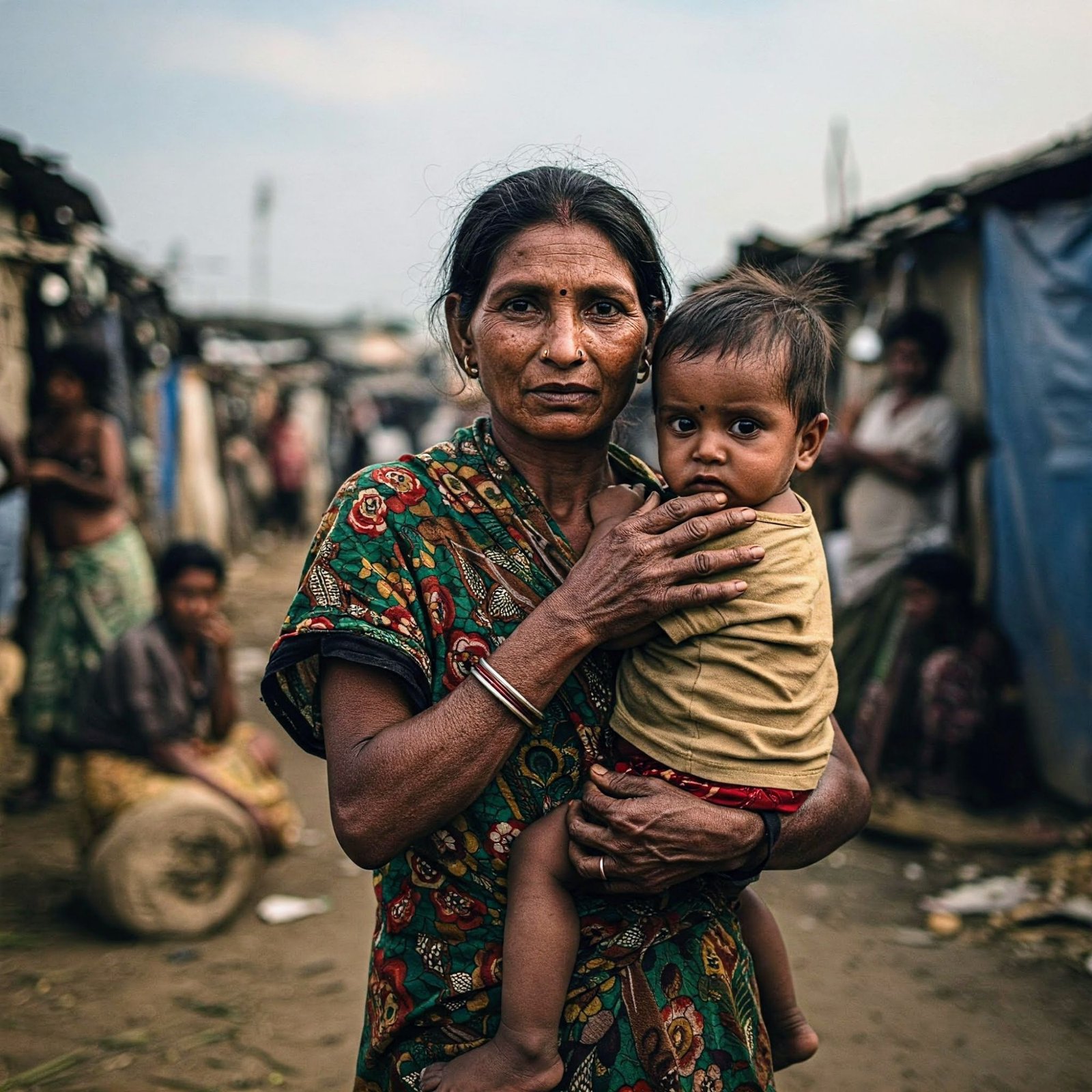
In 2025, as Togolese farmers receive AI-targeted cash transfers to survive climate shocks and Bangladeshi garment workers face 60% job losses to automation, the question isn’t whether AI can close the poverty gap—it’s whether we’ll let it. Artificial intelligence is rewriting the rules of global development, but its script oscillates between utopian promise and dystopian peril. Here’s the messy, thrilling, and deeply human story of AI’s fight against poverty—and itself.
Case Studies: Where AI Delivers (and Disappoints)
1. Cash Transfers & Crisis Response (Togo’s Digital Lifeline)
When COVID-19 devastated Togo’s informal economy, the government partnered with researchers to deploy an AI system analyzing satellite data, mobile money patterns, and village demographics. The algorithm identified 137,000 households in acute need, delivering $10 biweekly via mobile wallets—a lifeline during lockdowns. “This wasn’t about replacing humans,” says World Bank economist Anit Mukherjee. “It was about speed and precision in chaos.”
2. Precision Agriculture (From Famine to Feast)
In sub-Saharan Africa, startups like FarmDrive use AI to analyze soil health and weather patterns, boosting yields by 20% for smallholder farmers. Meanwhile, Zipline’s drones—guided by predictive algorithms—deliver blood supplies to Rwandan clinics, cutting maternal mortality by 51%. Yet these wins contrast starkly with regions like South Sudan, where 80% lack electricity, rendering AI tools moot.
3. The Job Market Jolt (Bangladesh’s Garment Dilemma)
Bangladesh’s $45B garment industry, which lifted millions from poverty, now faces an existential threat: AI-driven sewing robots and automated quality checks could displace 4 million workers by 2030. While some remain as AI supervisors, most lack access to upskilling programs. “Automation isn’t evil—but unpreparedness is,” warns CGDev’s Alexander Hradecky.
The Four Horsemen Of The AI Apocalypse
1. The Digital Divide (Is 3 Billion Are Left Offline?)
AI’s benefits require basics like electricity and broadband—luxuries 27% of low-income countries lack. Kenya’s geothermal-powered data centers thrive, while Somalia’s internet penetration languishes at 12%. As IMF economist Gita Gopinath notes, “AI won’t feed a child who can’t charge a phone.”
2. Data Colonialism (Who Owns the Future?)
Rwanda’s AI Hub trains locals to build malaria-predicting models, but 72% of AI patents remain controlled by U.S. and Chinese firms. This “data colonialism” risks turning developing nations into passive data suppliers rather than innovators.
3. Bias In The Machine (Are Algorithms Freezing Out The Poor?)
Brazilian loan algorithms disproportionately reject favela residents; facial recognition tools misidentify ethnic minorities at twice the rate of Caucasians. “AI designed in Silicon Valley won’t solve Kinshasa’s problems without local input,” argues UNDP’s Romilly Golding.
4. The Climate Crunch (Is This AI’s Dirty Little Secret?)
Training Open AI’s GPT-5 consumed enough energy to power 1,200 homes for a year. By 2030, data centres may guzzle 30% of U.S. grid capacity—often relying on coal plants. For drought-stricken regions, this carbon footprint undermines AI’s humanitarian claims.
Solutions Require Rewriting The Algorithm Of Inequality
Leapfrog Infrastructure (Kenya’s Broadband Bet)
Kenya’s “Silicon Savannah” initiative connects 95% of citizens to high-speed internet, enabling AI-driven fintech like M-Pesa to bank 80% of adults. India’s Digital India program follows suit, linking 600,000 villages to broadband.
Education Revolution (Vietnam’s AI Curriculum)
Vietnam now teaches AI literacy in primary schools, while Morocco’s UM6P University offers Africa’s first AI ethics degree. “Teach coding and critical thinking,” urges Wharton’s Cornelia Walther l.
Localize Or Lose Ghana’s Homegrown AI
Ghana’s Farmerline app, built with local soil data, outperforms global agritech platforms. Rwanda’s AI Hub trains developers to combat malaria—not optimize ads.
Global Governance (The UN’s AI Trust Fund)
The UN’s AI Trust & Safety Programme funds 50+ projects across 30 nations, prioritizing ethical frameworks and equitable access. “AI must serve the many, not the few,” asserts Secretary-General António Guterres.
It’s Not About AI—It’s About Us Closing The World Poverty Gap Ourselves (With The Help Of AI Oviously)
AI isn’t a magic wand. It’s a mirror. When Togo’s algorithms deliver aid faster than any bureaucrat, it reflects our capacity for ingenuity. When Bangladeshi workers face obsolescence, it exposes our failure to prepare.
The technology itself is neutral—but its impact hinges on infrastructure, education, and governance. As Taylor Jo Isenberg of the Economic Security Project warns, “The next decade decides whether AI becomes a tool for liberation or a weapon of concentration.”
For every child accessing Khan Academy in Kigali, there’s a farmer offline in Juba. Bridging this gap demands more than code—it requires political will, global collaboration, and a stubborn belief that equity isn’t optional.
AI won’t close the poverty gap. But humans armed with AI just might.
Let us know your thoughts on the subject at techistheculture.bsky.social. Keep ahead of the game with our newsletter & the latest tech news.
Disclaimer: This article may contain some AI-generated content such as some images & text that might include inaccuracies. Learn more [here]. As Amazon Associates, we earn from qualifying purchases.