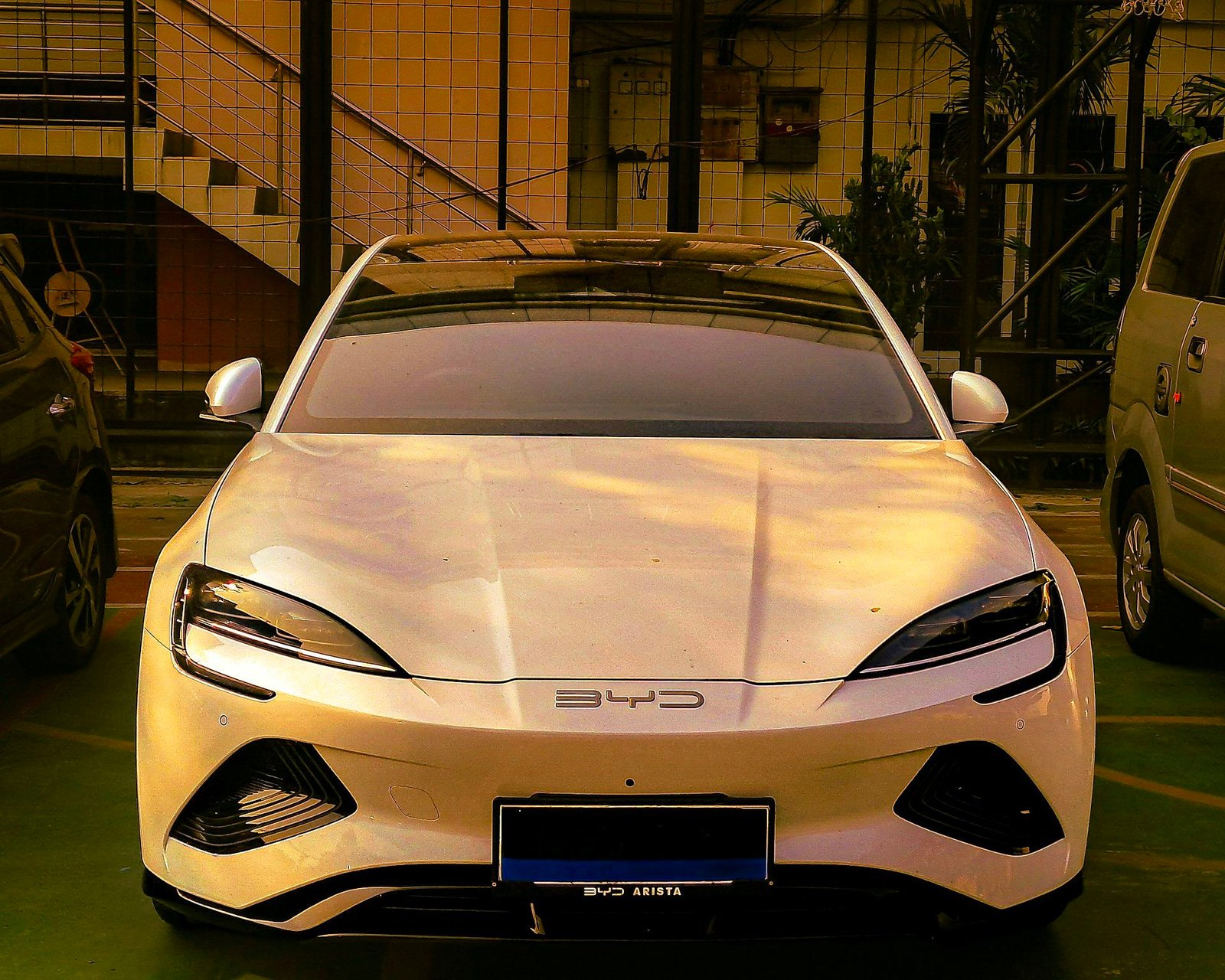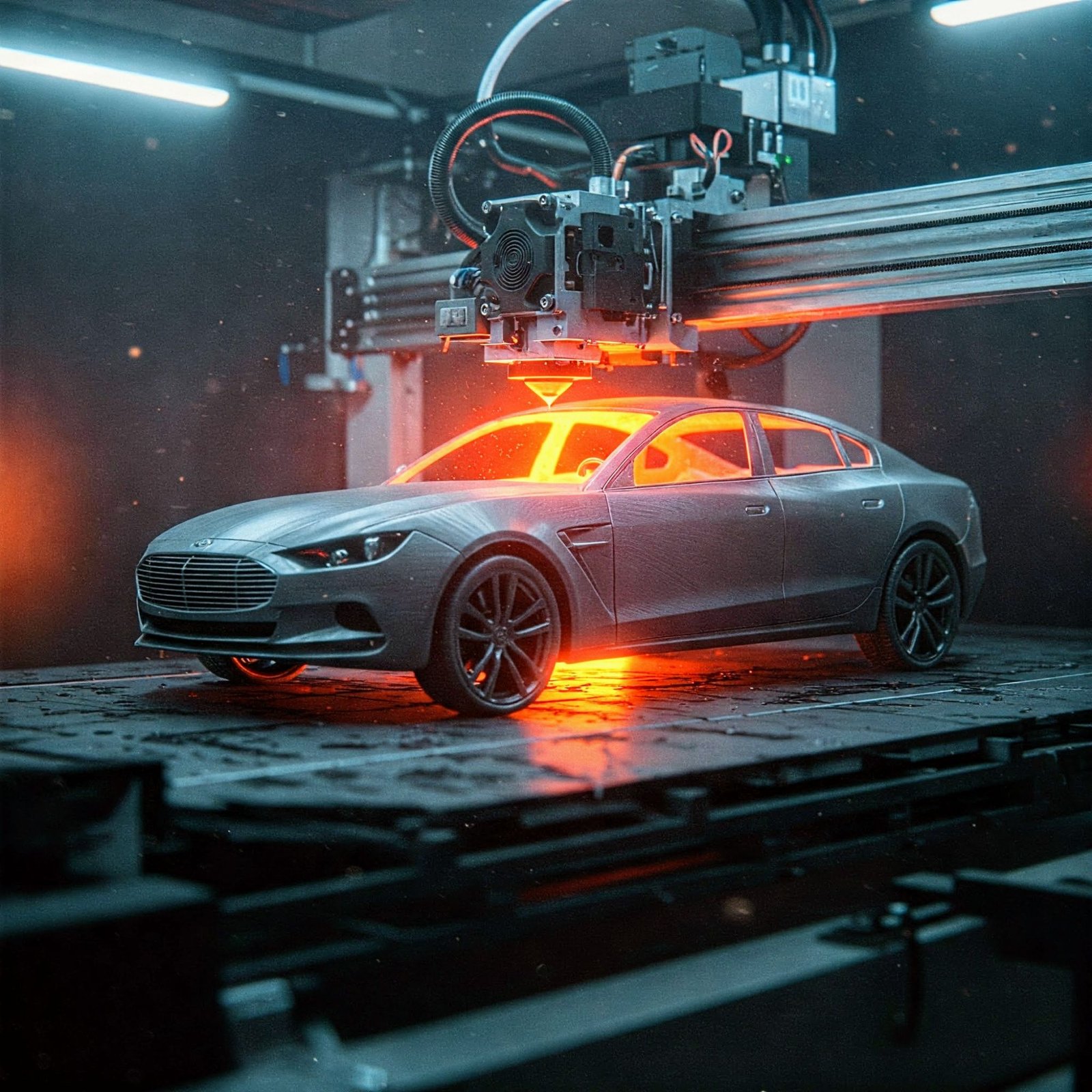
AI-Generated Image. 3D Printed Cars Are Disrupting The Automotives Industry For The Better by Tech Is The Culture
How 3D Printed Cars Are Disrupting the Automotive Industry (Spoiler: It’s Not Just About Printing a Honda Civic in Your Garage)
Let’s face it: the automotive industry has been stuck in the same gear for decades. Assembly lines? Henry Ford called—he wants his 1913 workflow back. But thanks to 3D printing, cars are getting a glow-up faster than a Tesla at a drag race. From brake calipers lighter than your ego to factories that print spare parts like morning memes, here’s how additive manufacturing is shifting the automotive world into ludicrous speed.
Rapid Prototyping For 3D Printed Cars (Moving From “Maybe Next Year” to “Done by Lunch”)
Gone are the days when prototyping a car part required months of machinist negotiations and enough paperwork to fuel a bonfire. With 3D printing, companies like Ford and BMW now churn out prototypes faster than a TikTok trend. At Ford’s Rapid Technology Center, engineers print same-day prototypes like the lettering for the Ford Puma’s rear so designers can literally feel their way to perfection. As Ford’s Bruno Alves puts it, “You can simulate lighting in software, but holding a physical prototype? That’s where the magic happens.”
Stratasys’ J850 3D printer takes this further, creating ultra-realistic interior prototypes for Volkswagen, complete with textures and colors that would make Pantone blush. The result? Design cycles slashed by 50%, and engineers freed from the shackles of “waiting for parts” purgatory.
Lightweighting (Because Heavy Is So Last Century)
If cars had Tinder profiles, “lightweight” would be their top trait. Enter Bugatti, which 3D printed titanium brake calipers for its Chiron hypercar. At 6.4lbs, 40% lighter than traditional aluminum, these calipers are the automotive equivalent of swapping a brick for a feather.
But it’s not just hypercars benefiting. Spanish supplier IGESTEK used 3D printing and generative design to create a suspension mount that’s 40% lighter, proving even everyday vehicles can shed weight without sacrificing muscle. Less weight means better fuel efficiency, faster acceleration, and fewer emissions, a triple win that’s greener than a Prius at a compost convention.
Customization Means Your Car, Your Rules (No Gold Rims Required)
Forget “any color as long as it’s black.” Audi used Stratasys’ J750 3D printer to prototype taillights in six materials and endless hues, bypassing the need for layered assembly. Meanwhile, BMW’s Mini brand lets customers design 3D-printed dashboard trims and door handles, turning cars into personalized art projects.
Even racing teams are in on the action. The Moto2 team TransFIORmers printed a titanium wishbone suspension that’s 40% lighter and stiffer than traditional parts because why race with last season’s tech? Customization isn’t just for luxury anymore; it’s for anyone who’s ever thought, “My car should reflect my personality… which is mostly caffeine and chaos.”
Sustainability Equals Printing A Greener Future (Literally)
3D printing is the Marie Kondo of manufacturing: it sparks joy by cutting waste. Traditional methods like machining can waste up to 90% of raw materials, but additive manufacturing uses only what’s needed. Porsche, for instance, 3D prints spare parts for classic cars on demand, saving warehouses from becoming graveyards of obsolete components.
Then there’s Local Motors’ Olli, an autonomous electric shuttle with a 3D-printed chassis and body panels. It’s like the automotive version of a reusable coffee cup, functional, eco-friendly, and proof that sustainability can be chic.
On-Demand Production (Bye-Bye, Inventory Hoarding)
Why stockpile parts when you can print them like a grocery list? Porsche and General Motors are leading the charge with digital inventories. Porsche prints clutch levers and engine components on demand, while GM consolidated eight seat bracket parts into one 3D-printed stainless steel marvel. This “Netflix for car parts” approach slashes storage costs and keeps classic cars on the road because nothing says “vintage cool” like a ’30s carburetor cap printed in 17-4 PH stainless steel.
The Future Is Concept 3D Printed Cars to Your Driveway
The Czinger 21C, a 3D-printed hypercar that laps circuits faster than a caffeinated cheetah, proves additive manufacturing isn’t just for prototypes. With 3D-printed chassis components and a record-breaking Goodwood Hill Climb time, it’s a rolling billboard for what’s possible.
Meanwhile, students at AGH Racing built an electric race car with 3D-printed battery casings and aerodynamic molds, showing that the next gen isn’t waiting for permission to innovate.
The Road Ahead Is Printed
3D printing isn’t just disrupting the automotive industry; it’s giving it a full-system update. Faster prototyping, lighter designs, and eco-friendly production are no longer futuristic buzzwords; they’re today’s assembly line staples. As Radosław Wróbel of 3DGence notes, “The times when 3D printing was just for prototypes are long gone.”
So, will your next car be fully 3D-printed? Maybe not yet. But with companies printing everything from brake calipers to autonomous shuttles, the future is looking less Fast & Furious and more Printed & Precise. Buckle up it’s going to be a wild ride.
Let us know your thoughts on the subject at techistheculture.bsky.social. Keep ahead of the game with our newsletter & the latest tech news.
Disclaimer: This article may contain some AI-generated content that might include inaccuracies. Learn more [here].